
Clothing that holds both function and design for contemporary urban life - garments that are "normal" but interesting.
Graphpaper's Spring & Summer 2024 collection is filled with new challenges from Takayuki Minami.
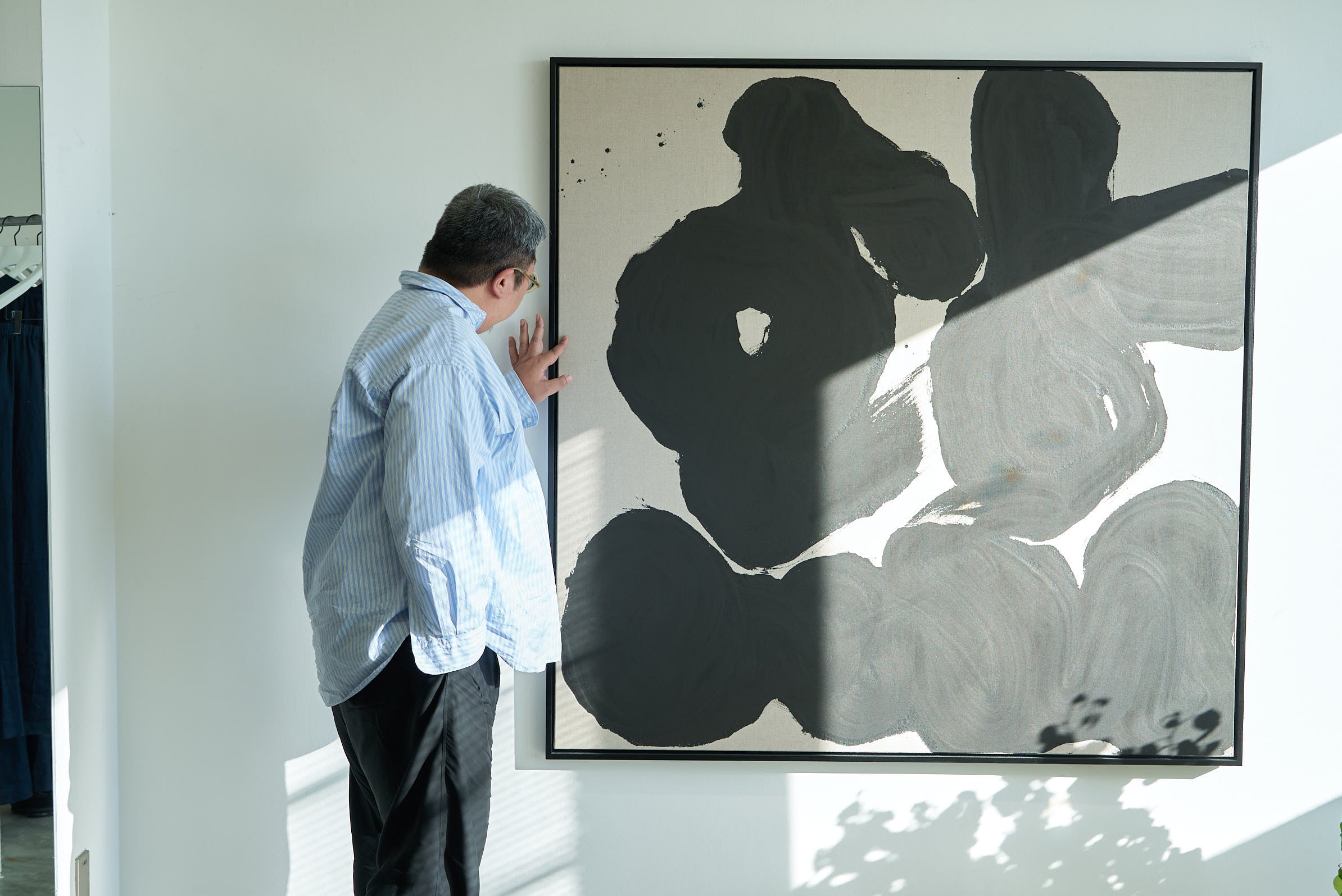
An endless pursuit of black.
―What defines Graphpaper's 2024 Spring & Summer collection?
Minami: This season, the theme is "墨 - Sumi" (traditional Japanese ink made from soot and animal-based glue). At first, I simply planned to make a collection based around black. To create "black clothing," I started by asking: what is black? When I dug into the color, I realized again that there isn't just one black - there are infinite shades. With fabric, if you dye with bengara (a red iron oxide pigment) before black, you get a reddish black. If you dye with indigo first, it becomes a bluish black. Even within one word - black - the variations are immense.
―Looking at the items, each black certainly has a different nuance.
Minami: After that, I researched methods of "making things black" as widely as possible - not only dyeing, but also coating, weaving, and more. I visited mills, dye houses, met craftsmen who paint by hand - I really went deep. Through that process, I arrived at sumi. The gradation between light and shadow, the density of black - like ink wash paintings or calligraphy. Even with black alone, there's depth and tonal difference. That image became the foundation. The wide range of blacks in this collection is the result of exploring black through many approaches.
―Could you explain using an item as an example?
Minami: The cotton typewriter jacket and trousers were made by pursuing the question - what is true black? We had them dyed by Kyoto Montsuki, a dye house specializing purely in black since 1915. They told us, true black is darkness itself. In other words - without the presence of light, you reach pure black. But once you perceive light, it's no longer black. Their Deep Black finish uses special processing that scatters light and reduces reflection, making the eye perceive a deeper black. That's how we achieved this darkness.
―They really do look darker than the rest.
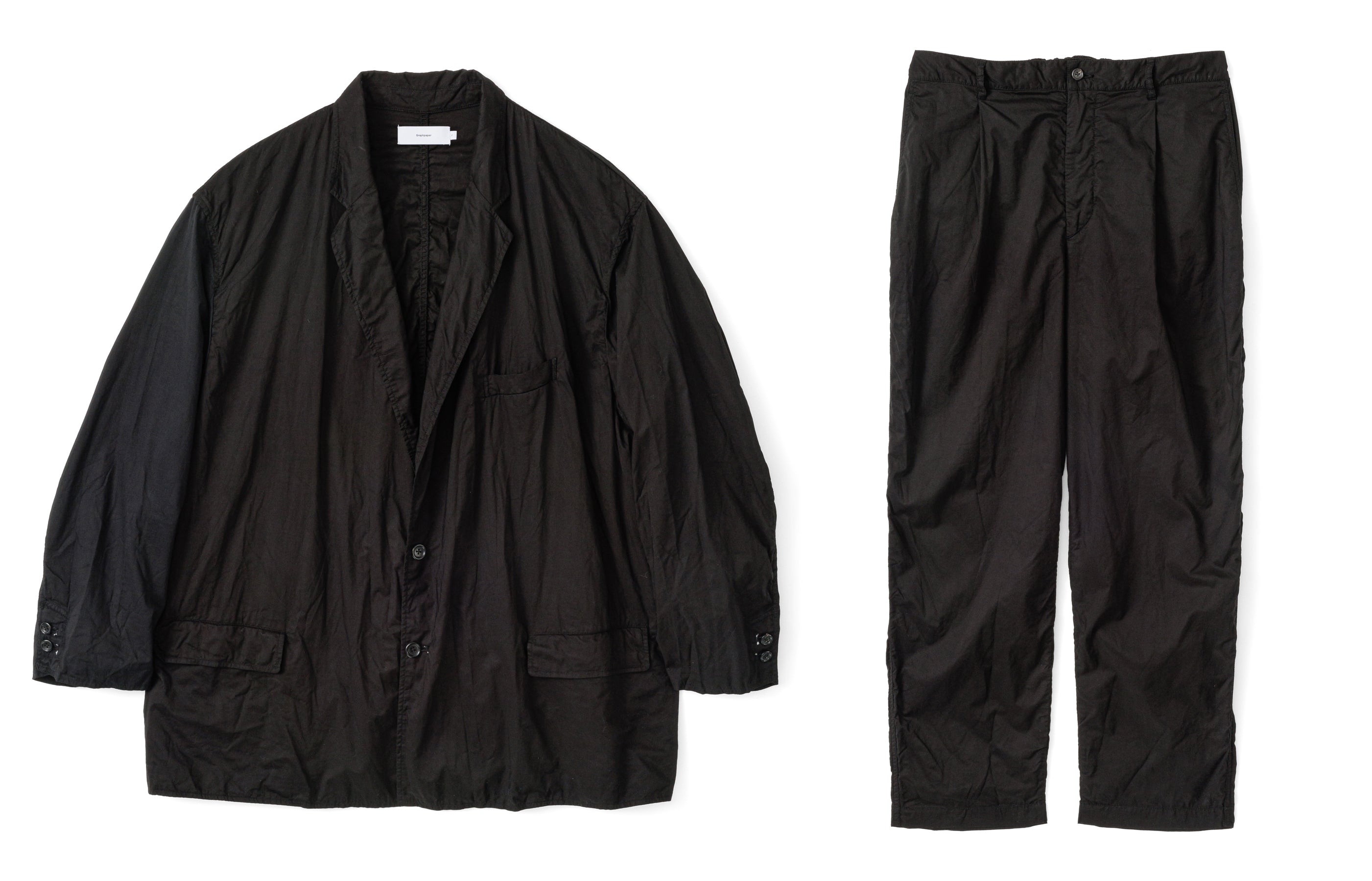
A deeply saturated black achieved by Deep Black processing on high-density cotton typewriter cloth.
JACKET Garment Dyed Typewriter Jacket ¥58,300
PANTS Garment Dyed Typewriter Slacks ¥41,900
Minami: The setup also comes in a linen–cupro blend. Because linen and cupro absorb dye differently, it results in a unique tone and texture. It would have been easier to dye a single material in sumi-black, but we wanted to take on a challenge in both color and technique - and we managed to land on the exact sumi-black we envisioned.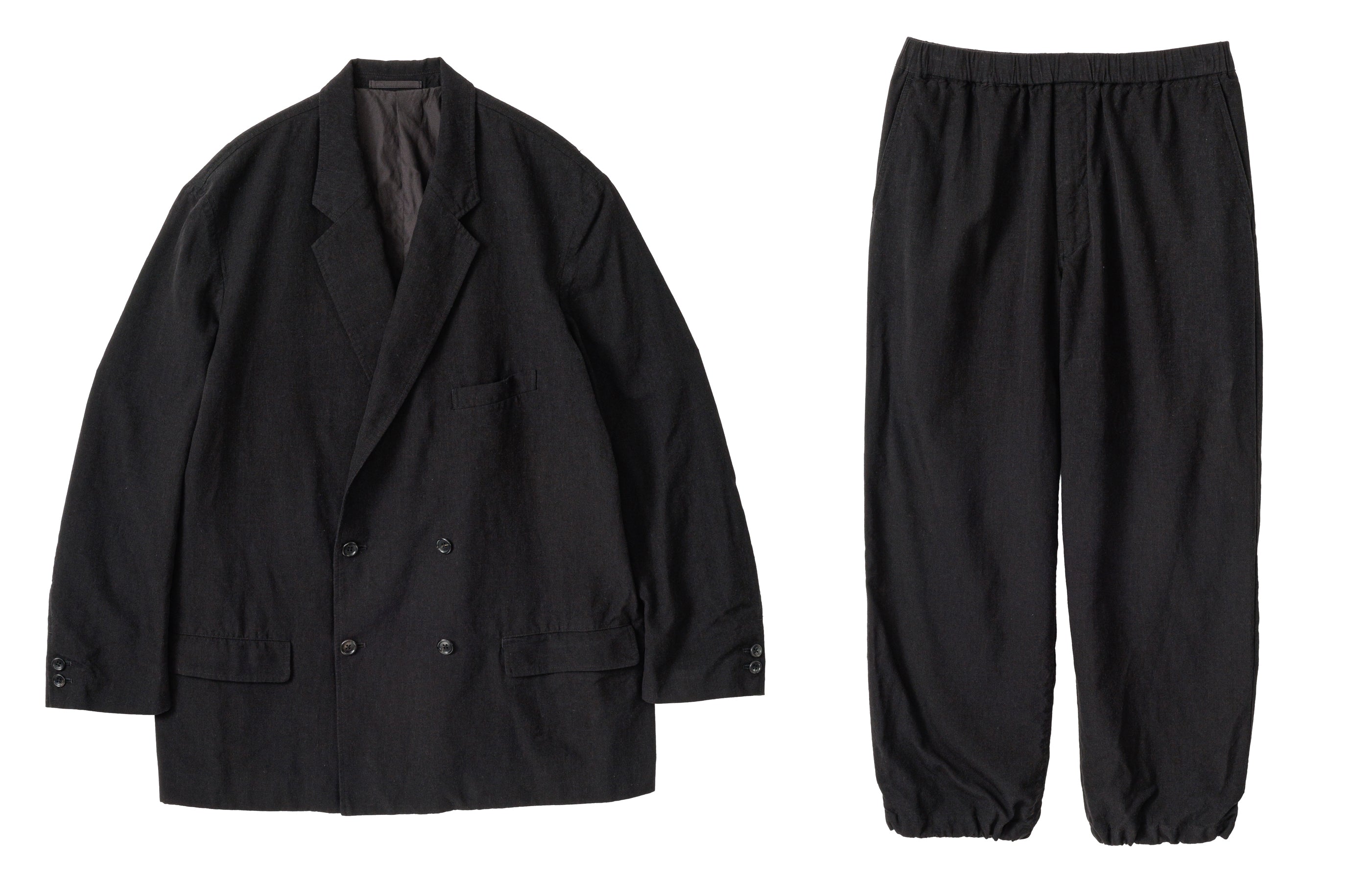
A natural linen texture combined with cupro's fluid drape. Differences in dye uptake create a distinctive sumi-black expression, on a jacket and track pants.
JACKET Linen Cupro Double Jacket ¥74,800
PANTS Linen Cupro Track Pants ¥37,400
―The denim has a unique tone as well.
Minami: It's a light-ounce denim made from U.S. cotton blended with hemp. By mixing sumi into the indigo dye coating, we created a black with deep blue undertones. The collarless jacket exposes a glimpse of its contrasting white lining at the turned edge, giving it a lighter impression.
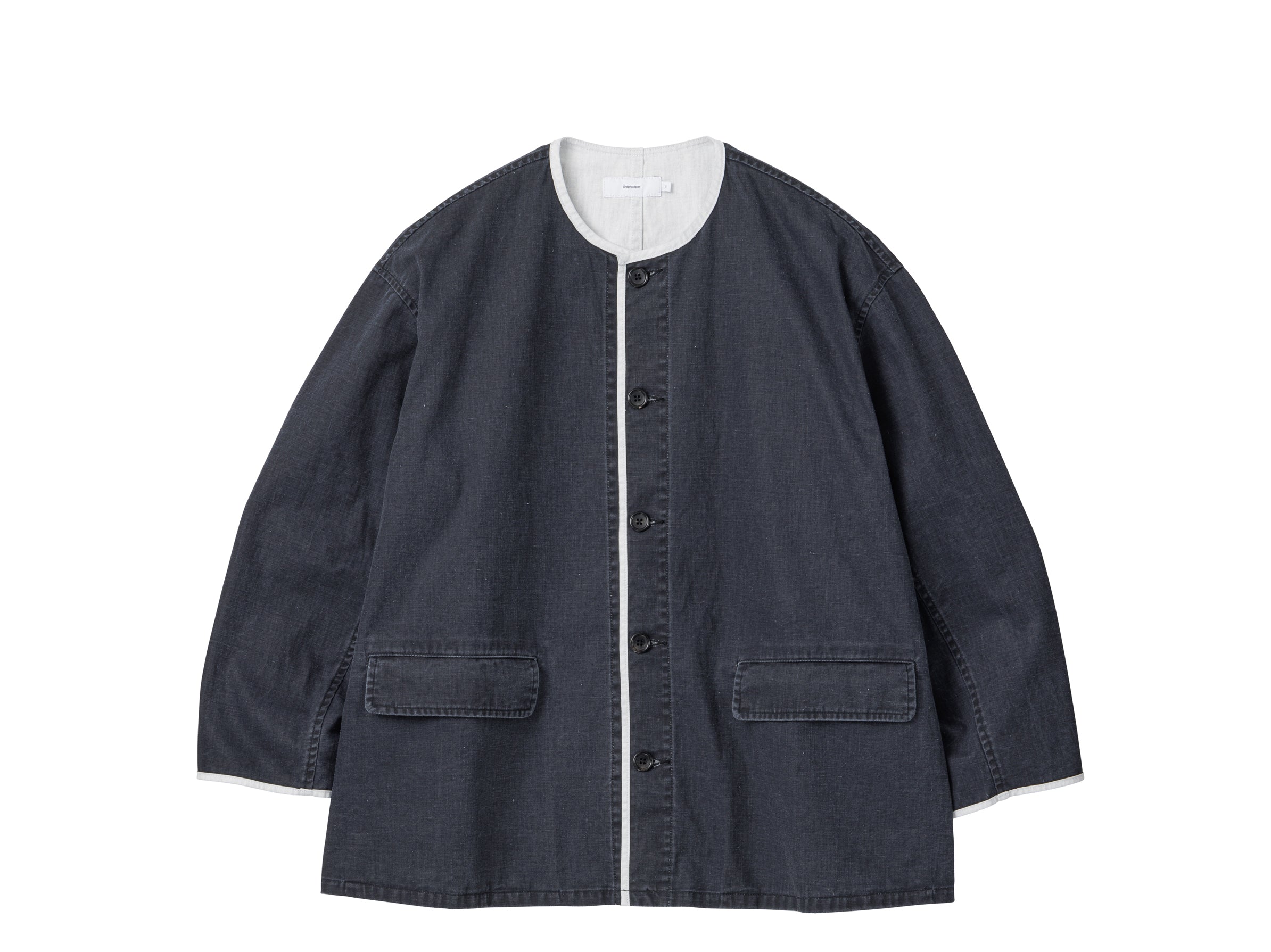
A jacket coated with indigo mixed with sumi for a deep, blue-tinted black. Matching shorts and pleated trousers also available.
JACKET SUMI Coated Denim Collarless Jacket ¥52,800
Minami: In past Graphpaper collections, black tended to read austere and minimal. This season, black expresses itself from many angles.
―It seems fun to style by combining different blacks.
Minami: I'm lazy so I'd just match top and bottom in the same fabric. But mixing them could be interesting too.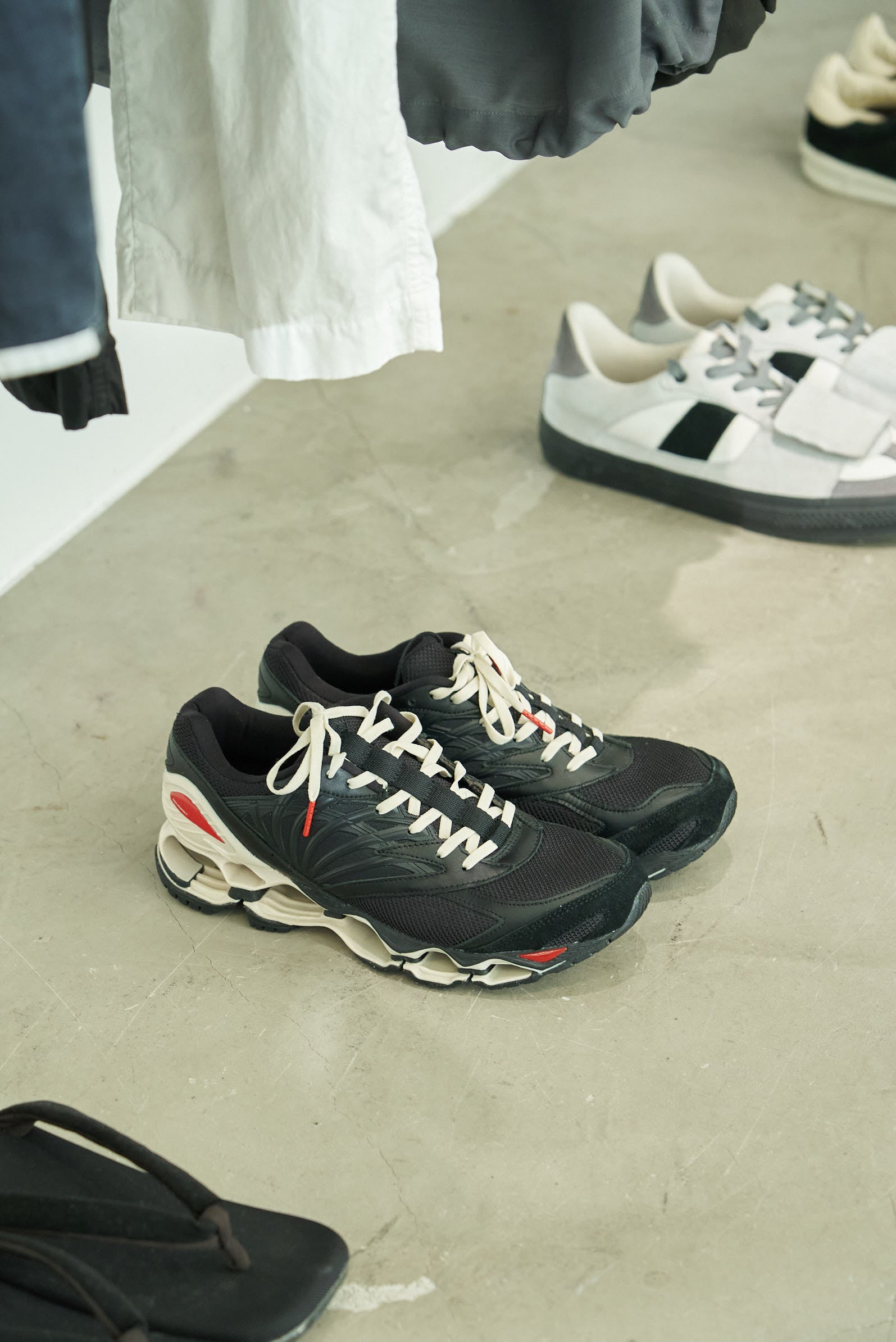
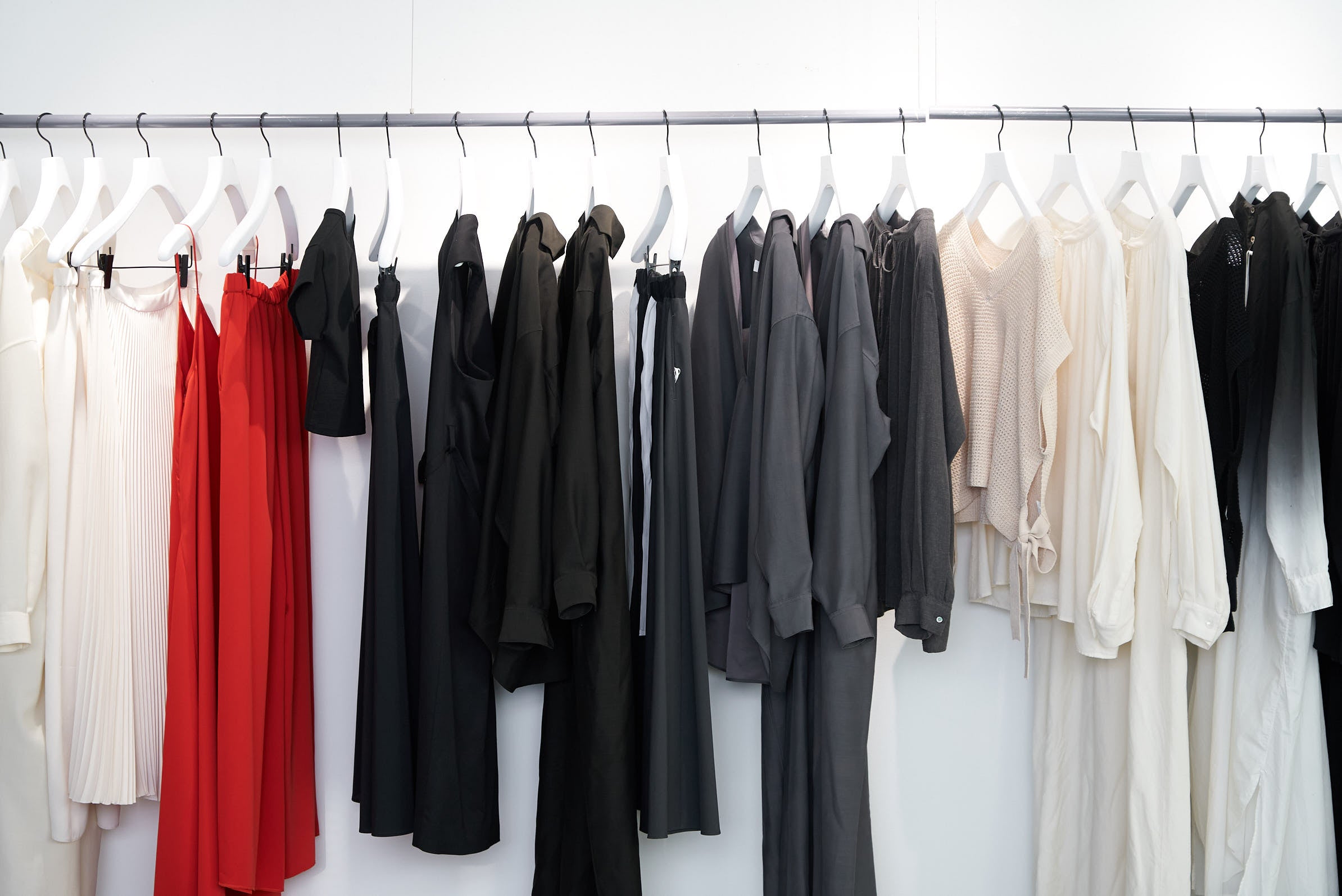
The red used in sneakers and some womenswear is inspired by the vermilion seal marks stamped on calligraphy works.
Planned coincidence.
Minami: Beyond color, there's another key concept this season: coincidence - or controlled unpredictability. Since 2021 I've been running the gallery Hakushi, and I meet many artists regularly. I noticed that all of them work while negotiating with chance. Ceramic artists, for example, can't fully control the results of firing - sometimes it frustrates them, sometimes it excites them. Whether they try to control it, or intentionally don't, that interplay forms their work.
―Some artists discover something new by not controlling it.
Minami: I've always been the typical detail-obsessed type - if something was slightly off-line, I couldn't stand it. I wanted clothing to be clean and precise as intended. But through conversations with artists, I began to grow interested in outcomes beyond my control - things that go beyond imagination. I'd been wanting to try it someday, and finally realized it this season.
―Clothing production involves precise instructions for yarn, weave, stitching, finishing, etc. How did you introduce chance into that?
Minami: I thought - maybe if we break the rules, we get unpredictability. So we washed fabrics that shouldn't be washed, dyed fabrics that shouldn't be dyed, ripped them, applied heat…
―That's pretty avant-garde (laughs).
Minami: I told our production team - it can get wrinkled, shrink to half the size - just try anything. I think they struggled the most, but they also said it was extremely fun.
―Any failures too extreme to commercialize?
Minami: Surprisingly, most worked out. For the wool gabardine coat and jacket, we left seams raw without attaching the lining, then applied fulling and steaming processes to shrink and crinkle the fabric — letting edges fray. When we calculated and specified the fray length precisely, it looked awkward. With looser direction - and using an uncontrollable metal brush - it turned out great.
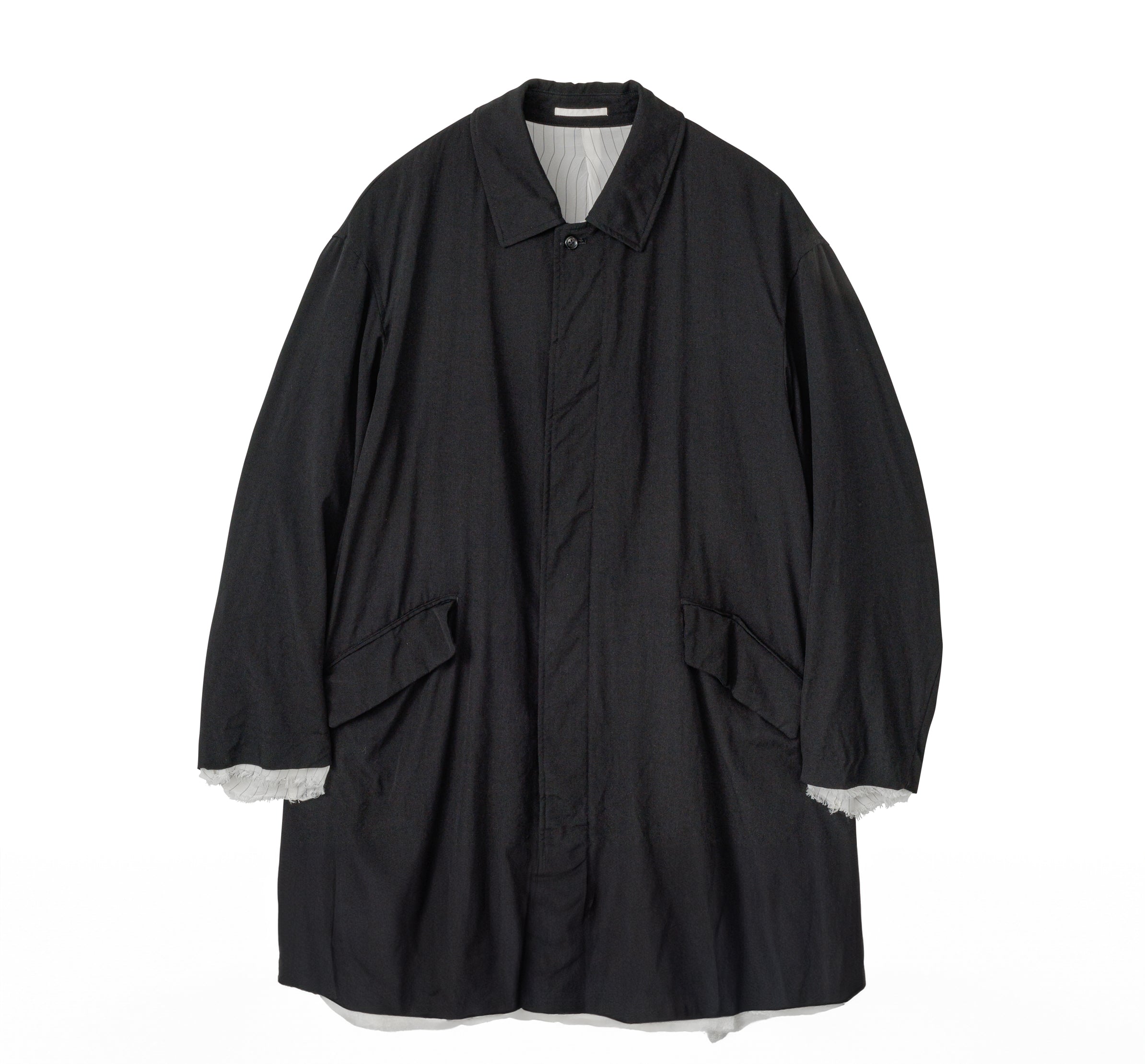
Lining peeks out at the sleeves and hem. An 80s-style washer finish wool gabardine with low-density yarn for airy lightness and dry touch.
COAT Wool Twill Washer Bal Collar Coat ¥121,000
―A major shift from Graphpaper's clean image.
Minami: We've experimented in small ways before, but never fully committed. This season is a real attempt at something I hadn't done. But showcasing these experimental garments next to clean, precisely-made tech materials is important - the balance between control and uncontrollable outcomes is what defines this collection.
Graphpaper 2024 Spring & Summer Collection
~ Installation by Daichiro Shinjo ~
As mentioned in the interview, we will host an installation expressing the theme "墨 - Sumi -" for the Spring & Summer 2024 Collection, opening Friday, February 23.
This installation spotlights items that strongly embody the theme, displayed alongside works by Daichiro Shinjo, whose sumi practice became a major inspiration during our research into black. Raised around sumi from childhood, Shinjo's expression resonates with the garments - creating a dialogue across disciplines.
Graphpaper
2024 Spring & Summer Collection
~ Installation by Daichiro Shinjo ~
Dates: February 23 (Fri) – March 17 (Sun), 2024
Closed: Wednesdays
Venue: Gallery 85.4
Jingumae Fashion Building 1F, 2-6-7 Jingumae, Shibuya-ku, Tokyo
Hours: 12:00 - 19:00


